

Prevent Costly Flood Damage: Your Homeowner’s Guide to Storm Drain Cleaning and Sewer Line Maintenance
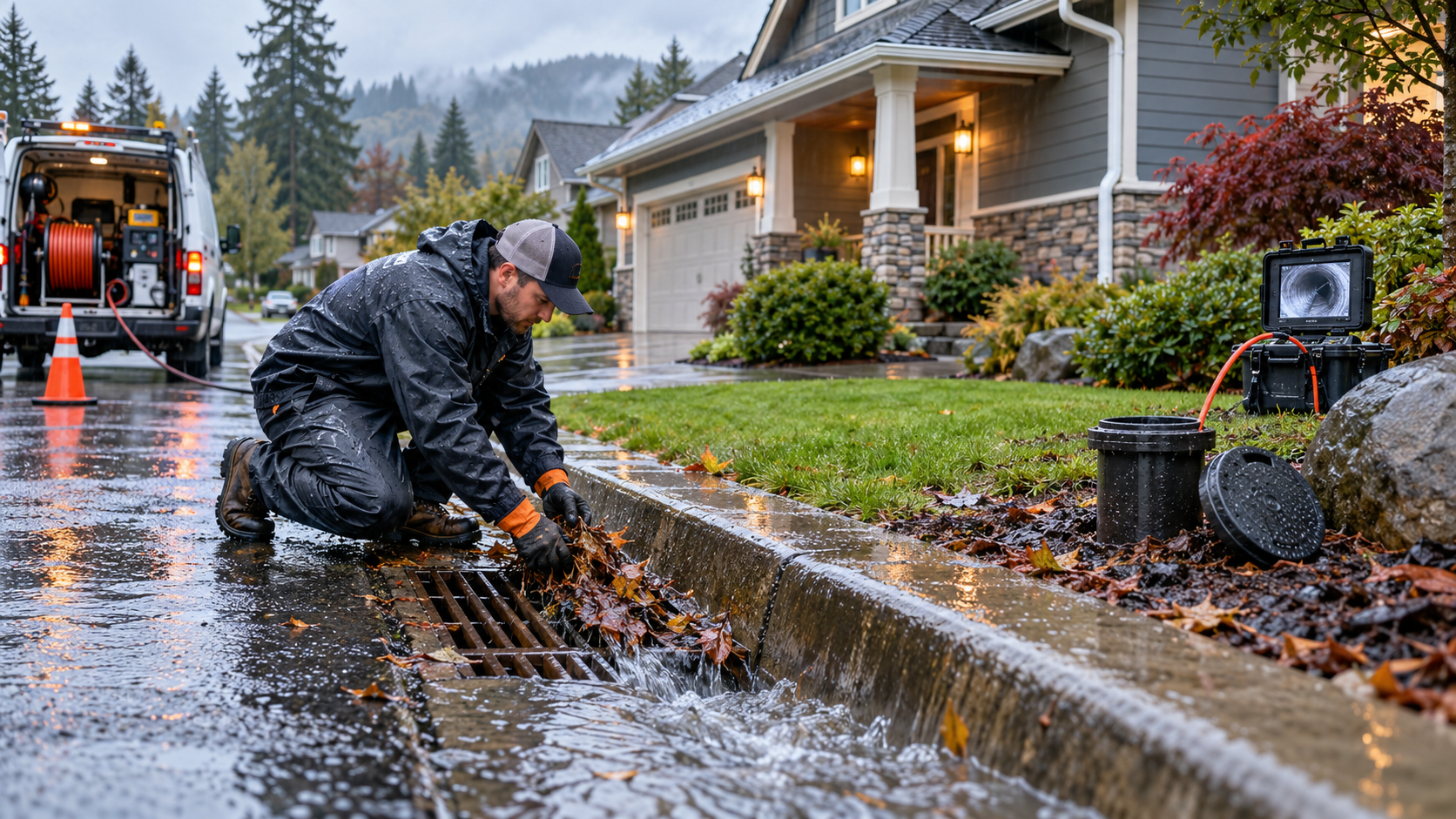
Living in Seattle means enjoying beautiful evergreen landscapes, waterfront views, and plenty of rainy days. However, when heavy rainfall combines with fallen leaves, clogged drainage openings, or deteriorating sewer pipes, water can end up where homeowners least want it. Whether you own a historic home in Ballard, a townhouse in North Seattle, or a single-family property in Everett, understanding how your drainage and sewer systems work can help you avoid preventable plumbing problems.
Preventing flood damage starts with keeping surface-water drainage systems functioning properly and addressing developing sewer line problems before they worsen. Storm drain cleaning helps rainwater move away from streets and other paved areas, while sewer line maintenance focuses on the underground pipes that carry wastewater away from your home. Both are valuable preventative measures, although neither can eliminate every possibility of flooding or sewer backups.
Here are a few things Seattle-area homeowners should know:
-
Storm drain cleaning in Seattle helps prevent leaves, dirt, and other debris from blocking the flow of rainwater into drainage systems.
-
Homes in older neighborhoods throughout Seattle and Everett may have aging sewer lines that benefit from professional inspections.
-
Slow drains, recurring blockages, and unusual wastewater odors can indicate problems within residential sewer connections.
-
Some Seattle neighborhoods have combined sewer systems, while other areas use separate stormwater and wastewater infrastructure.
-
Preventative maintenance is most effective when recommendations reflect the property’s plumbing condition, drainage layout, and previous problems.
Understanding the Difference Between Storm Drains and Sewer Lines
Storm drains and sanitary sewer lines perform different jobs, making it important to understand which system may be contributing to a drainage problem. Storm drains generally collect rainwater from streets and paved surfaces, while sanitary sewer lines carry wastewater from toilets, sinks, showers, and other household plumbing fixtures.
In Seattle, the relationship between these systems depends on the neighborhood and existing infrastructure. According to Seattle Public Utilities, the city has combined, separated, and partially separated sewer systems. Combined systems carry stormwater and wastewater through shared pipes, while separated systems keep these flows in different networks.
This distinction matters because clearing leaves from a street drain won’t necessarily resolve a blockage inside your home’s sewer line. Likewise, cleaning a sanitary sewer line won’t correct water pooling around a driveway because of a clogged exterior drain.
For homeowners in the greater Puget Sound area, understanding these differences is the first step toward choosing the right maintenance approach. Instead of assuming all drainage problems require the same solution, identifying where the water originates helps determine what needs attention.
How Storm Drain Cleaning Helps Reduce Localized Flooding
Storm drain cleaning helps reduce localized flooding by removing leaves, sediment, and other debris that prevent rainwater from entering drainage openings. During Seattle’s wet fall and winter months, keeping accessible grates clear can help water move through the drainage system instead of collecting around curbs, streets, and driveways.
This is particularly relevant in tree-lined neighborhoods such as Wallingford, Ravenna, and Green Lake. As autumn leaves fall and rainfall becomes more frequent, debris can accumulate over storm drain grates and restrict water flow.
Seattle Public Utilities encourages residents to help maintain accessible storm drains by removing surface debris when conditions are safe. The agency also advises homeowners to avoid entering roadways or attempting to clear underground drainage structures themselves.
What Can Homeowners Safely Do?
You don’t need specialized plumbing equipment to take care of basic surface maintenance around accessible exterior drains. However, knowing where routine cleaning ends and professional work begins is essential.
Consider these preventative steps:
-
Rake leaves before they wash into nearby drainage openings.
-
Remove loose debris from safely accessible storm drain grates using a broom or rake.
-
Inspect outdoor drainage points near driveways, patios, and walkways.
-
Keep yard debris away from drainage channels and catch basin openings.
-
Report public storm drains that remain clogged after safe surface cleaning.
Never remove a public storm drain grate, reach into underground drainage structures, or attempt to clear a drain while standing in traffic. If water continues collecting after surface debris has been removed, the obstruction may be deeper within the drainage system.
For Seattle residents, public drainage concerns can be reported through the city’s Find It, Fix It service. Private drainage systems may require evaluation by an appropriately qualified contractor.
Why Sewer Line Maintenance Matters for Seattle Homeowners
Sewer line maintenance helps protect residential plumbing by identifying developing obstructions, damaged piping, and drainage restrictions before they contribute to recurring backups. For Seattle and Everett homeowners, this can be especially valuable when a property has older underground sewer connections or a history of plumbing problems.
Homes in neighborhoods such as Capitol Hill, Queen Anne, and Fremont represent different periods of residential development. Some older properties may still have aging sewer piping, although the condition of an individual sewer line depends on its materials, installation, maintenance history, and surrounding environment.
At Goldstar Plumbing, we believe homeowners deserve straightforward answers about their plumbing systems. As a family-owned, veteran-operated plumbing company, we focus on helping customers understand their options rather than recommending unnecessary work.
What Can a Sewer Line Inspection Reveal?
A professional sewer line inspection can help identify conditions that aren’t visible from inside the home. Depending on the property’s plumbing configuration, a camera inspection may reveal several concerns.
These include:
-
Tree roots growing into damaged pipe joints.
-
Grease and other materials accumulating inside sewer lines.
-
Cracks or deterioration affecting underground piping.
-
Misaligned sections that restrict normal wastewater flow.
-
Low areas in piping where debris repeatedly collects.
-
Structural damage that may require further evaluation or repair.
The findings help determine whether cleaning, additional inspection, or corrective repairs may be appropriate. Not every sewer line needs frequent cleaning, and a system without recurring problems may require a different maintenance approach than one with repeated backups.
Rather than following a universal schedule, homeowners should consider their property’s age, previous sewer problems, and inspection results when planning maintenance.
Warning Signs That Your Drainage or Sewer System Needs Attention
Warning signs of drainage and sewer problems often include recurring clogs, unusually slow wastewater drainage, sewage odors, or standing water that appears in the same location after rainfall. Recognizing these symptoms early can help homeowners determine whether routine maintenance or a professional assessment is needed.
For homeowners in Seattle, Shoreline, Lynnwood, and Everett, knowing what to watch for is particularly helpful during extended periods of wet weather.
Common warning signs include:
-
Multiple household drains becoming slow at the same time.
-
Toilets making gurgling sounds when nearby fixtures are used.
-
Wastewater appearing in a bathtub or shower after flushing a toilet.
-
Recurring clogs that return shortly after being cleared.
-
Unpleasant sewage odors near drains or plumbing fixtures.
-
Water accumulating around exterior drainage openings.
-
Persistent moisture around basement walls or crawl spaces.
-
Repeated puddling near the foundation after moderate rainfall.
These symptoms can have different causes, so homeowners shouldn’t automatically assume every puddle or slow drain indicates a serious sewer problem. However, recurring issues deserve closer attention because they may point to conditions that routine surface cleaning cannot correct.
If sewage enters your home, avoid contact with contaminated water and stop using plumbing fixtures that may worsen the backup. Professional assistance is appropriate when wastewater is backing up, multiple drains are affected, or underground piping is suspected to be damaged.
Preventative Drainage Maintenance That Makes Sense in the Pacific Northwest
Preventative drainage maintenance works best when homeowners regularly inspect accessible exterior drainage areas and address plumbing concerns based on actual system conditions. In the Pacific Northwest, seasonal rainfall, mature trees, and varied property elevations make it worthwhile to understand how water moves around the home.
For example, a property near Seattle’s hilly residential streets may experience different drainage concerns than a relatively level property in parts of Everett. Homes with sloped driveways, basement entrances, or lower-level exterior drains may also need additional attention to areas where water collects.
A Practical Homeowner Maintenance Checklist
Use the following checklist to help identify drainage and plumbing concerns throughout the year:
-
Early fall: Remove accumulated leaves from gutters, driveway drains, and safely accessible exterior drainage openings.
-
During rainy periods: Watch for recurring puddles, overflowing gutters, and water moving toward the foundation.
-
After significant storms: Check accessible drainage areas for fresh debris and signs of standing water.
-
Throughout the year: Pay attention to slow drains, unusual plumbing noises, and recurring household clogs.
-
When problems develop: Arrange a professional assessment rather than repeatedly attempting temporary fixes.
-
Following an inspection: Review recommended maintenance or repairs based on the actual condition of the system.
Seattle Public Utilities recommends inspecting private drainage systems and maintaining gutters, downspouts, and accessible drainage areas. The agency also encourages homeowners to seek professional assistance when underground drainage components need evaluation.
These steps won’t guarantee a flood-free property, but they can reduce certain preventable drainage problems. More importantly, they help homeowners recognize when an issue requires attention before it becomes more disruptive.
Can a Backwater Valve Help Protect Your Home?
A backwater valve can help protect certain residential plumbing systems by preventing sewage from flowing backward through connected piping during specific sewer backup conditions. However, whether a home would benefit from one depends on its plumbing configuration, elevation, and applicable installation requirements.
A backwater valve contains a mechanism that allows wastewater to flow outward under normal conditions. If sewage begins moving in the opposite direction, the mechanism closes to help restrict reverse flow through the protected line.
For homes with basement bathrooms, lower-level showers, or floor drains, evaluating the potential need for a backwater valve may be worthwhile. However, the device must be correctly selected, positioned, installed, and maintained to function as intended.
Homeowners should also understand that backwater valves don’t prevent every type of water intrusion. They won’t stop rainfall from entering through foundation cracks, overflowing gutters, or improperly drained exterior stairwells.
If you’re interested in this type of protection, begin with a property-specific plumbing assessment. A qualified professional can evaluate whether the device is appropriate and explain any applicable installation requirements.
Common Mistakes That Can Make Drainage Problems Worse
Common drainage maintenance mistakes include ignoring recurring symptoms, confusing surface-water problems with sewer backups, and attempting repairs without understanding the underlying cause. These decisions can allow relatively manageable issues to continue or make existing plumbing problems more difficult to diagnose.
One mistake is repeatedly using chemical drain cleaners whenever a fixture drains slowly. While the problem may seem temporarily improved, chemical cleaners won’t repair cracked piping, correct misaligned sewer lines, or permanently resolve tree root intrusion.
Another mistake involves assuming that a cleared storm drain means every drainage concern has been addressed. If water continues collecting against the foundation, the property may have grading, gutter, or underground drainage problems that need separate evaluation.
Homeowners should also avoid overlooking recurring sewer odors or multiple slow drains simply because wastewater eventually disappears. These symptoms may indicate an obstruction that deserves investigation, even when the plumbing system remains usable.
Finally, scheduling unnecessary maintenance without first understanding the condition of the sewer line can lead to work that doesn’t address the actual problem. Professional inspection findings provide a more reliable foundation for deciding whether cleaning or repairs are appropriate.
Frequently Asked Questions About Storm Drain Cleaning and Sewer Line Maintenance
1. How often should storm drains be cleaned in Seattle?
Accessible storm drain grates should be checked regularly during periods of falling leaves and heavy rainfall, particularly when debris frequently accumulates nearby. There isn’t one universal cleaning schedule for every property. Homeowners can remove surface debris when safe, while underground obstructions and public drainage problems should be reported or professionally evaluated.
2. Is storm drain cleaning the same as sewer line cleaning?
No, storm drain cleaning and sewer line cleaning address different drainage systems. Storm drains generally manage rainwater runoff, while sanitary sewer lines transport household wastewater. Some Seattle areas have combined infrastructure, but the systems and maintenance needs still vary by location and property configuration.
3. What are the benefits of professional sewer line inspections?
Professional sewer line inspections can identify root intrusion, accumulated debris, pipe deterioration, and structural damage that may interfere with wastewater drainage. Camera inspections also help determine whether cleaning or repairs are appropriate. This information allows homeowners to make maintenance decisions based on actual pipe conditions rather than assumptions.
4. Do older Seattle and Everett homes need more sewer maintenance?
Older homes may benefit from closer attention when they contain aging sewer piping or have experienced recurring drainage problems. However, a property’s age doesn’t automatically mean its sewer line is damaged. Inspection results, pipe materials, nearby vegetation, and maintenance history provide a better basis for determining the need for service.
5. Can sewer line maintenance prevent basement flooding?
Sewer line maintenance may reduce the likelihood of backups caused by certain blockages or damaged sewer piping. However, it won’t prevent basement flooding caused by foundation leaks, surface runoff, or exterior drainage problems. Protecting lower-level spaces may require evaluating several separate water-entry risks.
6. Should Seattle homeowners install backwater valves?
Some homeowners may benefit from backwater valves, particularly when their plumbing configuration makes certain reverse-flow sewer backups a concern. However, not every property needs one. Professional evaluation is necessary to determine suitability, correct placement, and maintenance requirements before installation is considered.
7. What should I do if my driveway drain keeps overflowing?
Recurring driveway drain overflow may indicate surface debris, an underground obstruction, inadequate drainage capacity, or another property-specific issue. Start by removing loose debris from safely accessible grates. If water continues pooling, a qualified professional can assess the drainage system and recommend appropriate corrective measures.
8. When should I call a plumber about recurring sewer problems?
Contact a plumber when multiple fixtures drain slowly, sewage odors persist, wastewater backs up, or clogs repeatedly return after cleaning. These symptoms may indicate a problem beyond an individual fixture. A professional assessment can help locate the cause and determine whether cleaning, inspection, or sewer line repairs are necessary.
Keep Your Seattle Home’s Drainage System Working the Way It Should
Preventing flood damage doesn’t require homeowners to anticipate every storm or become experts in underground plumbing. Instead, it begins with understanding how rainwater and wastewater move through different systems, maintaining safely accessible drainage areas, and addressing recurring plumbing concerns when they arise. Whether you’re maintaining an older property in Seattle, caring for a townhouse in Shoreline, or managing a family home in Everett, preventative attention can make a meaningful difference in protecting your property.
At Goldstar Plumbing, we understand that homeowners want practical solutions, clear explanations, and dependable workmanship. Our family-owned, veteran-operated approach focuses on helping customers understand their plumbing concerns and make informed decisions about appropriate maintenance and repairs. Rather than treating every slow drain or drainage concern the same way, we believe in evaluating the situation and recommending work that addresses the actual problem. If you’ve noticed recurring sewer issues or have questions about your home’s plumbing condition, we’re here to help you explore the next steps.
Take a Proactive Approach to Your Home’s Plumbing
Protecting your property starts with recognizing problems early and knowing when professional assistance is appropriate. Contact our team to discuss your sewer line concerns, request a plumbing assessment, or learn more about preventative maintenance options.