

How Much Does Side Sewer Replacement Cost in Seattle?
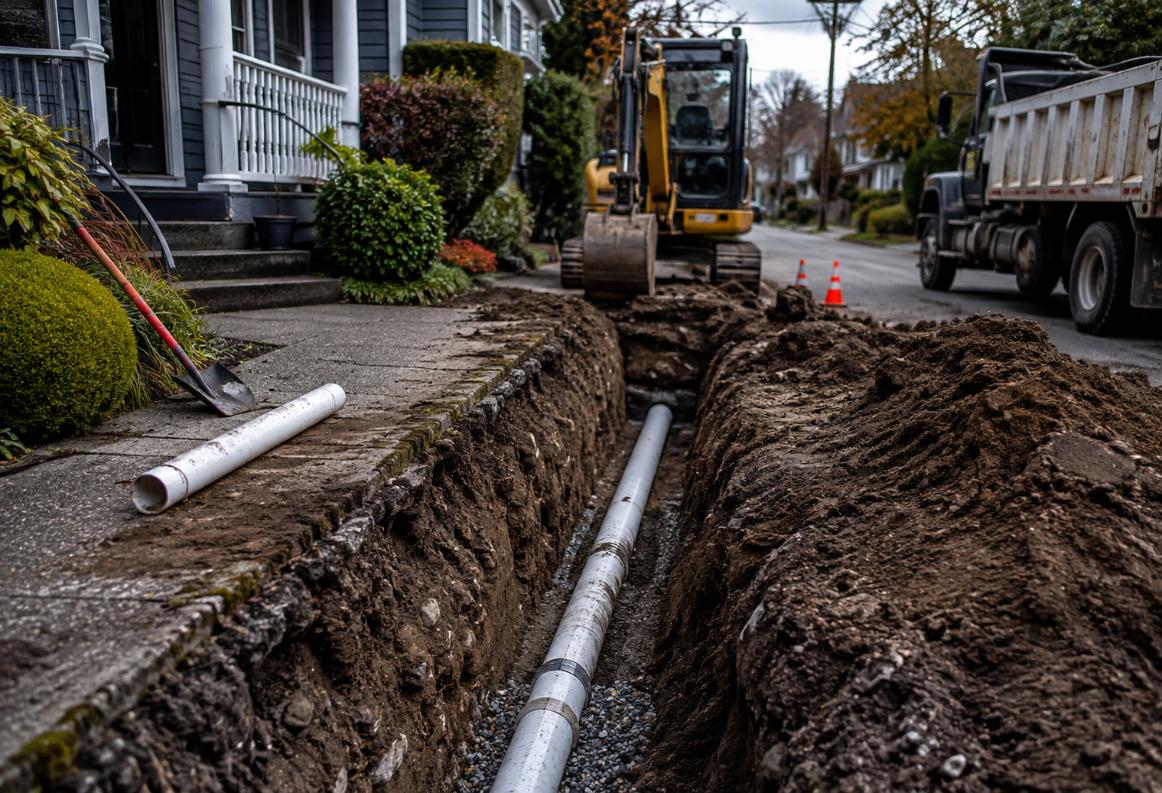
A failing side sewer can turn into an expensive property problem quickly, especially in older Seattle neighborhoods where sewer lines may run beneath landscaping, driveways, sidewalks, or mature trees. If you are dealing with recurring backups, slow drains, or a damaged sewer line, understanding replacement costs can help you plan before the problem becomes more disruptive.
Quick answer: Side sewer replacement in Seattle does not have one reliable flat price because the final cost depends heavily on the pipe’s length, depth, condition, location, access, and replacement method. Excavation beneath a driveway or other hardscape can add substantial work, while trenchless options may reduce surface disruption when site and pipe conditions allow. A sewer camera inspection and site-specific estimate are the best ways to determine your actual cost.
What local property owners should know
-
Sewer replacement costs can increase when the damaged line is deep, difficult to access, or located beneath concrete, pavement, retaining features, or established landscaping.
-
Older neighborhoods such as Ballard, Queen Anne, Capitol Hill, and Wallingford can have aging sewer infrastructure and mature trees that complicate sewer work.
-
A camera inspection can help identify breaks, root intrusion, offsets, deterioration, and other conditions before deciding whether repair or replacement makes sense.
-
Seattle property owners may need to account for permits, inspections, and restoration requirements depending on where the work occurs.
-
Trenchless replacement can reduce excavation in some situations, but it is not automatically the right solution for every side sewer.
Why Does Side Sewer Replacement Cost Vary So Much in Seattle?
Side sewer replacement cost in Seattle varies because every property has a different combination of pipe length, depth, access, surface conditions, and existing sewer damage. A relatively accessible line through an open yard can be very different from one running beneath a driveway, retaining wall, mature landscaping, or other difficult-to-disturb areas.
Seattle’s housing stock adds another layer. Properties in established neighborhoods may have older piping materials, mature trees, additions, remodeled outdoor spaces, and tight access between neighboring homes.
Where the damaged section sits also matters. A contractor needs to determine what portion of the sewer is affected, how it can be reached, and what surfaces must be restored afterward.
Goldstar Plumbing can help property owners evaluate the condition of a side sewer and understand the available repair or replacement approaches. From this point forward, we focus on what the inspection shows and which option makes practical sense for the property.
What Should Seattle Homeowners Know About Local Side Sewers?
Seattle homeowners should know that the side sewer generally connects a property’s plumbing system to the public sewer system, making its condition an important part of reliable wastewater drainage. Problems along this line can affect multiple fixtures inside the home rather than just one sink, toilet, or shower.
Seattle Public Utilities provides information for property owners regarding side sewers, including resources related to records and responsibilities. City requirements can also affect work involving public areas or connections to the municipal system.
Because requirements and individual property conditions can change, homeowners should confirm current permit and inspection requirements for their specific project rather than assuming that one replacement process applies everywhere.
What Factors Have the Biggest Impact on Side Sewer Replacement Cost?
The biggest side sewer replacement cost factors are pipe length, excavation depth, accessibility, replacement method, surface restoration, and the extent of the damage. These factors determine how much labor, equipment, material, and restoration may be involved in completing the work.
1. Length of the sewer line
A longer replacement generally requires more pipe, labor, and site work. The location of the failed section can therefore make a major difference.
2. Depth
Deep sewer lines typically require more excavation and additional jobsite considerations than shallow lines.
3. Access
A sewer running through an open portion of a yard may be easier to reach than one between structures or beneath hardscaping.
4. Surface conditions
Concrete, driveways, patios, landscaping, and other improvements may need to be removed or protected during conventional excavation. Restoration can become a meaningful part of the overall project.
5. Replacement method
Traditional excavation and trenchless techniques involve different equipment, site requirements, and restoration needs. The least disruptive method is not necessarily available on every property.
6. Existing pipe condition
A camera inspection may reveal isolated damage, widespread deterioration, root intrusion, separated joints, or other conditions. Those findings help determine whether a limited repair is reasonable or broader replacement should be considered.
What Are the Warning Signs of a Failing Side Sewer?
Common warning signs of side sewer trouble include recurring drain backups, multiple slow fixtures, sewage odors, unusual yard conditions, and problems that return after routine drain clearing. One clogged fixture does not necessarily indicate sewer failure, but repeated whole-house drainage problems deserve closer investigation.
Watch for:
-
Multiple drains backing up around the same time
-
Toilets bubbling when other fixtures drain
-
Recurring sewer or drain backups
-
Sewage odors indoors or around the property
-
Unusually wet or sunken areas along the sewer route
-
Drain problems that return soon after cleaning
-
Evidence of roots or damaged piping during a camera inspection
A professional inspection can distinguish a blockage that may be cleared from structural damage that may require repair.
When Should You Call a Sewer Professional in Seattle?
You should call a sewer professional when backups affect multiple fixtures, problems repeatedly return, sewage appears inside the property, or an inspection indicates structural pipe damage. Those conditions can point to a problem beyond a normal fixture or branch-line clog.
Homeowners can safely watch how individual fixtures drain and note when symptoms occur. Sewer excavation, pipe replacement, and work involving municipal connections are different matters.
Prompt diagnosis is particularly useful when wastewater is backing up into living areas or when continued sewer use could cause additional property damage.
What Commonly Causes Side Sewer Problems in Seattle?
Common local side sewer problems can involve aging pipe, tree-root intrusion, deteriorated joints, shifting or damaged sections, and obstructions inside the line. The actual cause should be confirmed through inspection because similar symptoms can result from very different sewer conditions.
Mature trees are common throughout neighborhoods such as Green Lake, Ravenna, West Seattle, and Beacon Hill. Roots can exploit openings in compromised sewer joints or damaged piping.
Older properties may also have sewer materials and connections that have been in service for decades. Age alone does not prove that replacement is necessary, but recurring problems combined with documented pipe deterioration can make replacement worth evaluating.
Can Side Sewer Problems Be Prevented?
Some side sewer problems can be reduced through careful drain use, timely inspections, and early attention to recurring symptoms, although homeowners cannot prevent every form of pipe deterioration. The most useful maintenance strategy is recognizing a developing problem before a severe backup or failure forces an emergency response.
Avoid flushing wipes and other materials that do not belong in the sewer system. Be cautious about sending grease and problematic debris down kitchen drains.
If your property has a history of root intrusion or recurring main-line blockages, ask a professional whether periodic inspection or maintenance is appropriate. DIY work should stop when the problem involves suspected pipe damage, excavation, or sewage exposure.
What Results Should You Expect From Side Sewer Replacement?
A properly planned side sewer replacement should address the damaged or deteriorated portion of the sewer and restore a dependable wastewater path from the property toward the municipal system. The exact project outcome and amount of surface disruption depend on the replacement method and conditions discovered during inspection.
Before work begins, property owners should understand which section is being replaced, the planned access method, expected excavation, restoration responsibilities, and applicable permit or inspection steps.
After replacement, ask what documentation is available regarding the completed work and what maintenance is appropriate for the new line.
What Mistakes Can Make a Seattle Sewer Problem More Expensive?
The costliest sewer mistakes usually involve repeatedly treating symptoms without identifying the underlying problem, delaying known structural repairs, or choosing a replacement approach before the line has been properly evaluated. A diagnosis-first approach gives property owners better information for comparing solutions.
Mistake: Paying repeatedly to clear the same blockage.
Consequence: Temporary flow may return while damaged piping remains unresolved.
Better approach: Investigate why the blockage keeps returning.
Mistake: Assuming every sewer problem requires full replacement.
Consequence: You may consider more work than the actual pipe condition requires.
Better approach: Determine the location and severity of damage first.
Mistake: Comparing estimates only by total price.
Consequence: Two proposals may include very different excavation, restoration, permitting, or replacement scopes.
Better approach: Compare what each estimate actually includes.
What Is a Common Side Sewer Scenario in Seattle?
A common Seattle side sewer scenario is an older property with recurring backups that continue even after the line has been cleared. A camera inspection may reveal roots, damaged joints, deterioration, or another structural condition that explains why the problem keeps returning.
This is a general local scenario, not a Goldstar Plumbing case study. The correct solution could range from maintenance or a localized repair to replacement, depending on what the inspection reveals.
The key is separating a removable obstruction from a damaged sewer that is likely to continue causing trouble.
What Services Can Help Solve a Side Sewer Problem?
Side sewer problems are best addressed by matching the service to the actual condition of the pipe, beginning with diagnosis and moving to cleaning, repair, or replacement when appropriate. This avoids treating every sewer symptom as the same problem.
Depending on the findings, relevant services may include sewer camera inspection, sewer and drain cleaning, targeted sewer repair, conventional sewer replacement, or trenchless solutions where conditions allow.
Is Sewer Repair or Replacement the Better Option?
Sewer repair is generally more appropriate for limited, repairable damage, while replacement becomes more practical when deterioration is extensive or recurring problems affect a larger portion of the line. The decision should be based on the pipe’s actual condition rather than age or symptoms alone.
A localized repair can make sense when damage is confined to a specific section. Replacement may deserve consideration when inspection shows multiple significant defects or deterioration that makes repeated repairs less practical.
Traditional excavation and trenchless replacement should also be compared based on access, existing pipe conditions, excavation requirements, and the surfaces above the sewer route.
What Areas Around Seattle Can Face Similar Sewer Issues?
Properties throughout Seattle and surrounding King County communities can experience sewer problems related to aging infrastructure, roots, difficult access, and established landscaping. Conditions vary significantly by individual property, even between neighboring homes.
Within the city, areas such as Ballard, Queen Anne, Capitol Hill, Wallingford, Green Lake, Ravenna, Beacon Hill, and West Seattle illustrate the range of older housing, mature vegetation, slopes, and dense development that can influence sewer projects.
What Can Happen If You Delay a Damaged Side Sewer?
Delaying a structurally damaged side sewer can lead to recurring backups, additional service calls, wastewater damage, and a more disruptive repair if the pipe continues to deteriorate. Not every sewer issue is an emergency, but documented structural damage should not be treated like an ordinary clog indefinitely.
Repeated backups can disrupt kitchens, bathrooms, laundry areas, and other parts of the property. If sewage is entering the home or the sewer is no longer functioning reliably, the need for professional evaluation becomes more urgent.
FAQ About Side Sewer Replacement in Seattle
How much does side sewer replacement cost in Seattle?
Side sewer replacement cost in Seattle must be estimated for the individual property because pipe length, depth, access, excavation, replacement method, and restoration can vary significantly. A camera inspection and site evaluation provide much more useful pricing information than a broad generic average that may not reflect your property.
Does Seattle require a permit for side sewer replacement?
Permit requirements can apply to side sewer work in Seattle depending on the scope and location of the project. Because requirements can change and projects differ, property owners should verify current rules with the appropriate City of Seattle department and make sure required approvals and inspections are included when planning the work.
Who is responsible for a side sewer in Seattle?
Responsibility depends on where the problem is located and how the property’s sewer connects to the public system. Seattle Public Utilities provides information about side sewers and property-owner responsibilities. Identifying the location of a defect is therefore an important early step when determining who should address the problem.
Can tree roots damage sewer lines in Seattle?
Tree roots can contribute to sewer problems when they enter openings in compromised pipes or joints. Mature vegetation throughout King County makes root intrusion a relevant concern, particularly when a line already has cracks, separations, or deteriorated connections. A sewer camera inspection can help determine whether roots are present and why they entered.
Is trenchless sewer replacement available in Seattle?
Trenchless sewer replacement may be an option for some Seattle properties, but suitability depends on the existing pipe, access, alignment, damage, and proposed replacement technique. It can reduce extensive surface excavation in appropriate situations. An inspection is necessary before deciding whether trenchless or conventional replacement is the better approach.
How do I know whether my sewer needs replacement or cleaning?
A sewer that simply contains a removable obstruction may need cleaning, while a line with significant structural deterioration may require repair or replacement. If backups repeatedly return after cleaning, a camera inspection can help identify roots, damaged sections, joint problems, or other conditions that explain the recurring trouble.
How long does side sewer replacement take?
Side sewer replacement time varies with the project’s length, depth, access, method, permitting needs, and restoration requirements. A straightforward accessible project may require substantially different scheduling than a deep line beneath hardscape or a difficult site. Ask for a project-specific timeline once the sewer has been inspected and the scope established.
Should I get a sewer inspection before buying an older Seattle home?
A sewer inspection can provide useful information when evaluating an older Seattle property, particularly if the condition of the side sewer is unknown. A camera inspection may identify defects or obstructions that are not visible during a standard walkthrough, helping buyers understand potential sewer-related maintenance or repair needs before making decisions.
Get Clear Answers About Your Seattle Side Sewer
Understanding the condition of your sewer is the first step toward making a sensible repair or replacement decision. We can help you identify the problem, understand the available options, and determine the appropriate next step for your property.
Protect Your Property With the Right Sewer Solution
Get a professional evaluation so you can make your decision based on the actual condition of your side sewer, not guesswork.