

Can Home Insurance Cover Side Sewer Damage in Seattle?
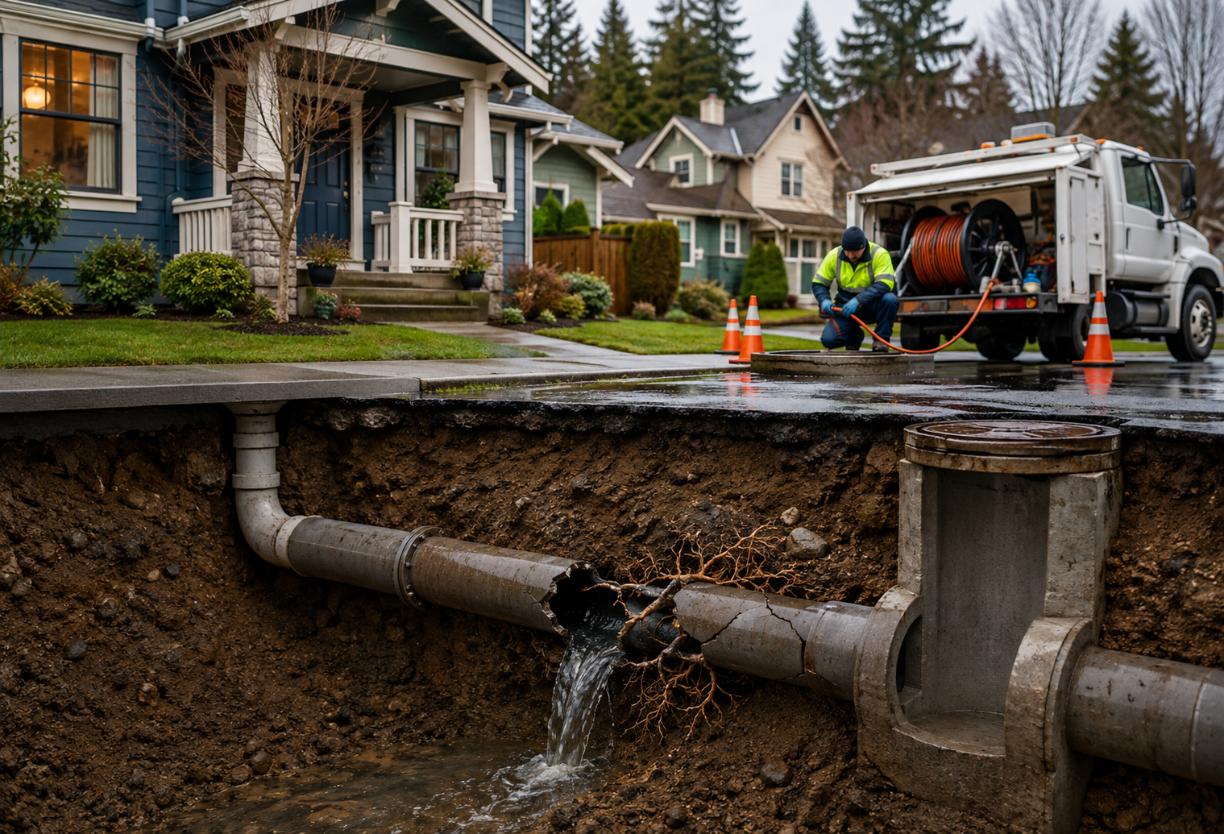
A backed-up or damaged side sewer can quickly turn into a major concern for Seattle homeowners, especially in older neighborhoods where sewer lines may have been in service for decades. Between mature tree roots, aging pipes, wet-season conditions, and the expense of excavating around a home, one of the first questions property owners often ask is whether homeowners insurance will help pay for the damage.
Quick answer: Homeowners insurance may cover some damage associated with a side sewer problem, but coverage depends on the cause of the loss and the terms, exclusions, endorsements, and limits in your specific policy. Standard policies do not necessarily pay to repair or replace the damaged sewer line itself. Sewer or drain backup coverage and service line coverage may provide additional protection when included in a policy.
What Seattle homeowners should know
-
A homeowners policy may treat damage inside your house differently from the cost of repairing the side sewer that caused it.
-
Sewer or drain backup coverage is often separate from the basic protections in a homeowners policy.
-
Service line coverage may apply to certain underground utility-line damage, depending on the policy and cause.
-
In Seattle, property owners are generally responsible for their side sewer, making it important to determine where a problem is located.
-
Older homes in neighborhoods such as Ballard, Queen Anne, Capitol Hill, and Wallingford may have sewer systems where age, roots, or previous repairs warrant closer investigation.
Why Does Side Sewer Insurance Coverage Matter in Seattle?
Side sewer insurance coverage matters in Seattle because homeowners can be responsible for underground sewer piping serving their property, while an insurance policy may cover only certain causes or portions of the resulting loss. Knowing the difference before approving repairs can help homeowners communicate more clearly with both their plumber and insurance carrier.
Seattle Public Utilities uses the term “side sewer” for the privately owned and maintained pipe carrying wastewater from a building toward the public sewer system. Responsibility for a particular repair can depend on where the defect is located and the circumstances involved.
That distinction can become especially important in established residential areas. Properties around Green Lake, Beacon Hill, West Seattle, and other older parts of King County can have landscaping, mature trees, retaining walls, driveways, or other features that complicate access to an underground sewer line.
Goldstar Plumbing works with local property owners facing plumbing and sewer concerns. When insurance may be involved, we can focus on identifying the plumbing problem and explaining the repair options while homeowners confirm coverage directly with their insurer.
What Local Data and Field Conditions Affect Side Sewers?
Seattle’s established housing stock, mature vegetation, and wet regional climate can all make side sewer condition an important property-maintenance issue. These conditions do not prove that a particular sewer has failed, but they provide good reasons to investigate recurring drainage symptoms instead of assuming every clog is a routine plumbing problem.
A side sewer can develop problems because of pipe deterioration, root intrusion, separated connections, cracks, obstructions, or movement around the pipe. The exact condition cannot reliably be determined from a home’s age or neighborhood alone.
A sewer camera inspection can provide more direct information about what is happening inside an accessible line. That information may also help a homeowner have a more specific conversation with an insurance company about the cause and location of damage.
How Can Side Sewer Damage Affect a Seattle Home?
Side sewer damage can affect a Seattle home through slow drainage, sewage backups, unusable plumbing fixtures, water damage, excavation needs, and disruption around the property. The severity depends on the location and type of failure as well as how quickly the problem is identified.
A blockage that is caught early may have a very different outcome from a collapsed or badly deteriorated line. If wastewater backs up into a basement or lower-level living area, the homeowner may face both a plumbing repair and cleanup or restoration work.
This is also where insurance questions become more complicated. A policy could potentially treat resulting interior damage differently from the failed underground pipe. Homeowners should avoid assuming that coverage for one automatically means coverage for the other.
What Are the Warning Signs of a Side Sewer Problem?
Common warning signs of a side sewer problem include recurring backups, multiple slow drains, sewage odors, unusual drain noises, and wastewater appearing at low plumbing fixtures. Seattle homeowners who notice several symptoms at once should consider having the sewer line evaluated rather than repeatedly treating individual drains.
Watch for:
-
Several fixtures draining slowly at the same time.
-
Toilets bubbling or gurgling when another fixture drains.
-
Recurring backups after a drain has already been cleared.
-
Sewage odors around drains, a basement, or the yard.
-
Wastewater backing up through a basement drain or other low fixture.
-
Unusually wet or sunken areas along a suspected sewer route.
-
A sudden change in drainage performance throughout the house.
-
Evidence of roots or structural pipe damage found during a camera inspection.
When Should You Call a Professional for a Side Sewer Problem?
You should call a plumbing professional when sewer symptoms affect multiple fixtures, repeatedly return after clearing, involve sewage, or suggest that the problem is in the main building drain or side sewer. A professional evaluation can help distinguish a localized fixture clog from a larger underground drainage problem.
Homeowners can safely note which fixtures are affected, when symptoms occur, and whether there has been a previous sewer problem. If sewage is actively backing up, limit unnecessary water use until the source is evaluated.
For insurance purposes, homeowners should also contact their carrier or agent promptly when a potentially covered loss occurs. A plumber can diagnose plumbing conditions, but the insurance company determines whether a loss is covered under the policy.
What Commonly Causes Side Sewer Damage in Seattle?
Common causes of side sewer problems in Seattle include root intrusion, aging pipe materials, cracks or separated joints, blockages, and structural deterioration. The most likely cause varies by property, so inspection is more reliable than guessing based solely on the age of the house.
1. Tree roots
Mature trees are part of many Seattle neighborhoods. Roots can enter an existing opening or vulnerable joint and create increasingly serious drainage restrictions.
2. Aging or deteriorated piping
Older properties may have sewer piping that has experienced decades of wear. Age alone does not mean a line requires replacement, but deterioration can increase the likelihood of defects.
3. Cracked or separated sections
Pipe movement or deterioration can create openings, offsets, or separations that interfere with normal flow.
4. Obstructions
Grease, debris, roots, and other materials can restrict a sewer line. Repeated obstructions may justify further investigation into the underlying pipe condition.
5. Structural failure
A severely damaged section may partially or completely lose its ability to carry wastewater properly. The appropriate repair depends on the location and extent of the damage.
How Can Seattle Homeowners Reduce the Risk of Sewer Problems?
Seattle homeowners can reduce sewer problems by paying attention to recurring drainage symptoms, using drains appropriately, and investigating known or suspected side sewer defects before they become more disruptive. Preventive attention is especially useful for older properties or homes with a history of sewer trouble.
Avoid sending grease, wipes, and inappropriate materials down household drains. Even products marketed as flushable can contribute to drainage problems.
If a home has recurring main-line blockages, consider asking whether a camera inspection would help identify the reason. Clearing the obstruction may restore flow, but it does not necessarily address a cracked, root-damaged, or deteriorated pipe.
Homeowners can also review their insurance before an emergency. Ask specifically about sewer or drain backup coverage and service line coverage rather than relying on the general phrase “homeowners insurance.”
What Results Can You Expect From a Side Sewer Inspection or Repair?
A side sewer inspection can help identify the location and visible nature of a sewer problem, while the appropriate repair can restore reliable wastewater flow when the diagnosed defect is addressed. The exact result and repair method depend on pipe condition, accessibility, location, and the extent of damage.
Some problems may involve clearing an obstruction. Others may require repairing or replacing damaged piping. A camera inspection can sometimes reveal roots, offsets, cracks, or other visible conditions, although additional investigation may be needed in some situations.
For an insurance claim, keep invoices, inspection findings, photographs, videos, and other documentation available. Your insurer can explain what documentation it requires and whether the diagnosed loss falls within your policy.
What Mistakes Should Homeowners Avoid With Sewer Damage?
The biggest mistakes with sewer damage are assuming insurance automatically covers it, repeatedly clearing a recurring problem without investigating the cause, and delaying action when sewage is backing up. A better approach is to diagnose the plumbing issue and verify policy coverage separately.
Mistake: Assuming all sewer damage is covered.
Consequence: A homeowner may approve work expecting reimbursement that the policy does not provide.
Better approach: Contact the insurer and ask what causes, resulting damage, service lines, and sewer backups are covered.
Mistake: Assuming no sewer damage is covered.
Consequence: A homeowner could overlook coverage or an endorsement that may apply.
Better approach: Have the carrier review the actual policy and circumstances.
Mistake: Treating every recurring backup as a simple clog.
Consequence: The immediate blockage may return if an underlying pipe defect remains.
Better approach: Consider further inspection when the same problem keeps happening.
What Is a Common Seattle Side Sewer Scenario?
A common Seattle side sewer scenario is an older home experiencing repeated main-drain backups that eventually lead the owner to investigate the underground sewer line. This is an illustrative local scenario, not a Goldstar Plumbing case study or a claim that every recurring backup indicates pipe damage.
Imagine a homeowner in Ballard who has had the main line cleared more than once. Another backup occurs, and a camera inspection identifies a damaged section with root intrusion.
At that point, two separate questions need answers. First, what plumbing work is appropriate to correct the sewer problem? Second, does the homeowner’s insurance policy cover the pipe damage, resulting property damage, cleanup, or any combination of those expenses?
The plumber addresses the first question. The insurance carrier addresses the second.
What Services Can Help Resolve a Side Sewer Problem?
Side sewer services can help locate blockages or damage, determine the condition of accessible piping, and identify appropriate repair options. The specific service a Seattle property needs should be based on diagnosis rather than choosing a repair method before the condition of the line is known.
Depending on the problem, professional plumbing assistance may include sewer and drain evaluation, camera inspection, clearing, repair, or replacement options.
How Should You Compare Your Side Sewer Options?
The best way to compare side sewer options is to match the solution to the diagnosed condition rather than automatically choosing the least expensive immediate fix or the most extensive repair. Seattle homeowners should consider whether the issue is a removable blockage, recurring root intrusion, localized pipe damage, or broader deterioration.
A straightforward obstruction may require a different response from a broken or collapsed pipe. Likewise, repeated clearing can become a short-term approach when a structural problem is causing the blockage to return.
Insurance should be considered separately. Ask your carrier whether the policy includes relevant coverage, what deductible applies, what documentation is required, and whether there are limits or exclusions that affect the claim.
Where Can Seattle-Area Homeowners Get Side Sewer Help?
Seattle-area homeowners can seek professional plumbing help when recurring backups or other drainage symptoms point to a possible side sewer problem. Property conditions can differ considerably between neighborhoods such as Capitol Hill, Queen Anne, Wallingford, West Seattle, Beacon Hill, and Ballard.
For properties elsewhere in King County, confirm service availability and local sewer responsibility requirements before scheduling work.
What Can Happen If You Ignore Side Sewer Damage?
Ignoring side sewer damage can allow recurring backups, drainage restrictions, or structural pipe problems to continue and potentially become more disruptive. For a Seattle household, that can mean lost use of plumbing fixtures, sewage entering lower areas of the home, additional cleanup, or a repair becoming more complicated.
Waiting can also make documentation harder if several unrelated plumbing events occur over time. When insurance might apply, report a potential loss according to the requirements of your policy and insurer.
FAQ
Does homeowners insurance cover side sewer repair in Seattle?
Homeowners insurance may cover certain side sewer losses in Seattle, but coverage depends on the policy and cause of damage. The pipe repair itself may be treated differently from resulting damage inside the home. Ask your insurer specifically about service line coverage, sewer backup coverage, exclusions, deductibles, and coverage limits.
Does homeowners insurance cover a sewer backup in Seattle?
A sewer backup may be covered when the homeowners policy includes applicable sewer or drain backup coverage. Standard coverage should not be assumed. Seattle homeowners should review their declarations and endorsements or contact their insurance carrier to determine whether backup damage and associated cleanup are covered.
Who is responsible for a side sewer in Seattle?
Property owners are generally responsible for their private side sewer, while Seattle Public Utilities maintains the public sewer system. The precise location of a defect can therefore matter when determining responsibility. If there is uncertainty about where the problem lies, identifying the location of the blockage or damage is an important first step.
Can insurance cover tree-root damage to a sewer line?
Insurance coverage for tree-root sewer damage depends on the specific policy, endorsements, and circumstances. Service line coverage may apply to certain underground line losses, but homeowners should not assume root intrusion is automatically covered. Have the plumbing condition documented, then ask the insurance carrier whether the diagnosed cause qualifies under the policy.
Are older Seattle homes more likely to need sewer inspections?
An older Seattle home may benefit from a sewer inspection when there are recurring backups, unknown sewer history, or other signs of a problem, but age alone does not prove the pipe is defective. Established neighborhoods can contain homes and underground infrastructure from many different periods, so the actual line condition should guide repair decisions.
Is a sewer camera inspection useful for an insurance claim?
A sewer camera inspection can be useful because it may document visible conditions and help identify the location and nature of a side sewer problem. Whether an insurer accepts or requires that documentation is up to the carrier. Keep inspection footage, findings, invoices, and available photographs when pursuing a potential claim.
What should I do if sewage backs up into my Seattle basement?
If sewage backs up into your Seattle basement, limit unnecessary water use and arrange for the drainage problem to be evaluated promptly. Avoid direct contact with sewage. If property damage has occurred and insurance may apply, contact your carrier promptly as well and follow its instructions regarding documentation and cleanup.
Should I call my plumber or insurance company first?
If there is an active plumbing emergency, contact a plumber to address the immediate sewer problem and your insurer promptly if property damage may be covered. The plumber can identify and document plumbing conditions, while the insurer determines coverage. Keep records from both so the cause, repair, and resulting damage remain clearly documented.
Protect Your Seattle Home From Recurring Sewer Problems
A side sewer problem does not automatically mean homeowners insurance will pay for every repair, but it also should not be assumed that no coverage exists. The cause of the damage, resulting loss, policy language, and optional endorsements all matter.
Get Clear Answers About Your Side Sewer Problem
We can help identify the plumbing issue so you can make informed repair decisions and discuss potential coverage with your insurance provider.